Last Updated on 15 September 2026
In July I wrote Beyond the Search Bar, on what OpenAI’s self‐serve ChatGPT Ads Manager could mean for charities once it reached the UK. At that point it was a “watch this space” piece, written ahead of a rollout that was “expected before long.”
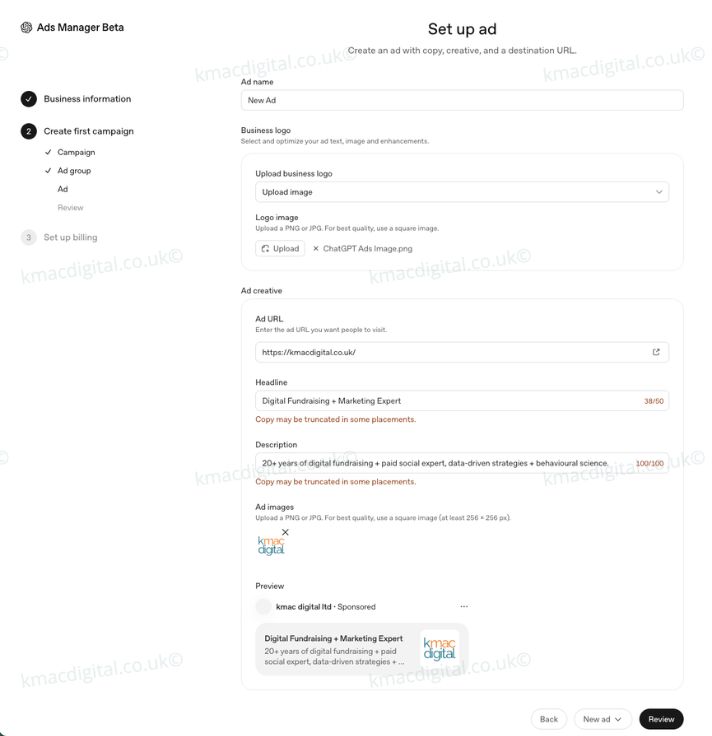
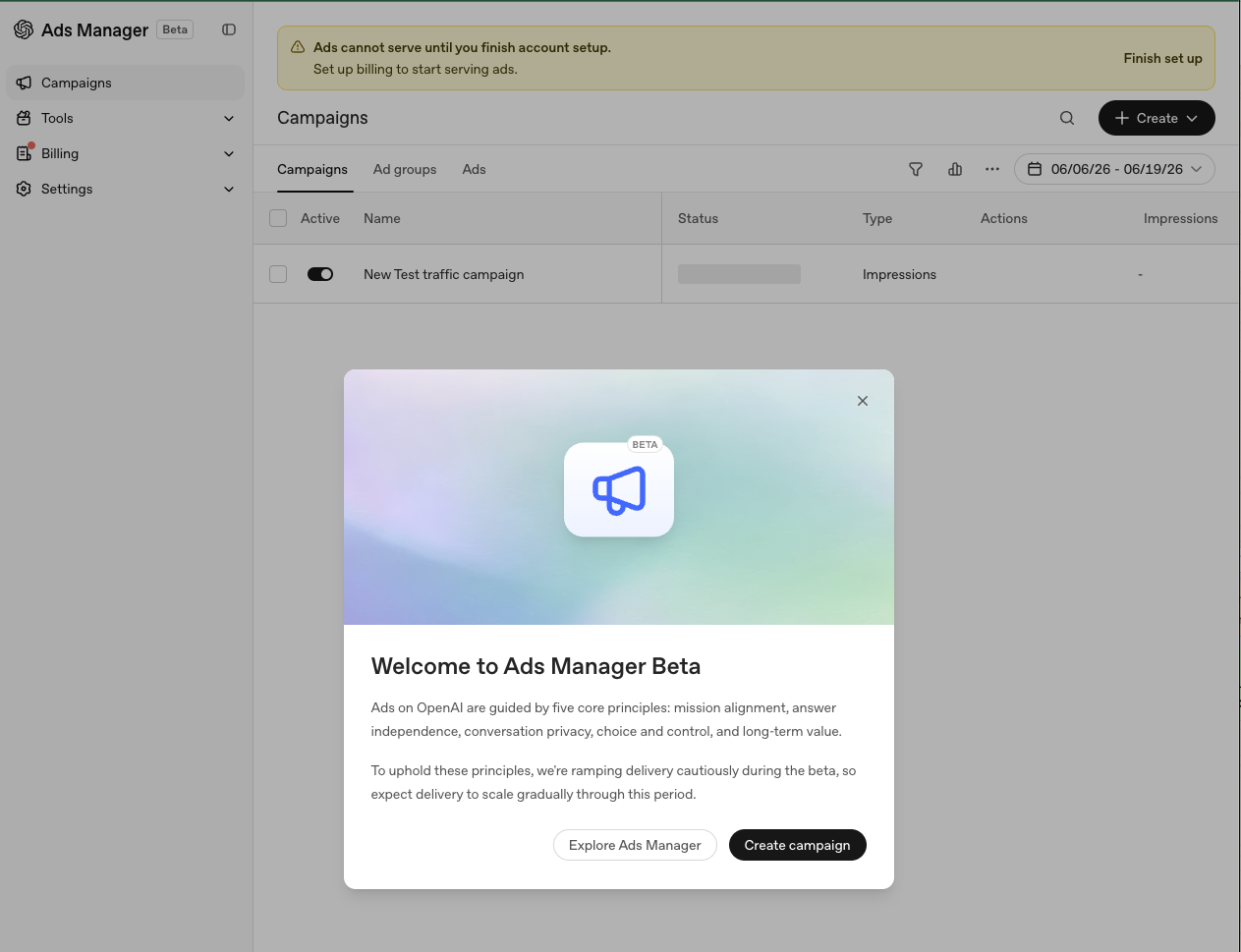
Well, before long has arrived. My access has come through, so I’ve been clicking around the dashboard and I thought I’d show you what it actually looks like in practice.
Update, 17 July 2026: custom audience targeting has arrived, and the real minimum is lower than first reported
OpenAI has added custom audience targeting to ChatGPT Ads, letting you upload email or phone lists to include or exclude specific people in a campaign, or apply bid adjustments for known audiences, similar to custom audiences on Meta or Google. An early report on this suggested a 100,000-identifier minimum that would put it out of reach for most charities, but OpenAI’s own documentation confirms the actual hard minimum is 25,000 matched users. OpenAI simply recommends 100,000 or more for the best performance.
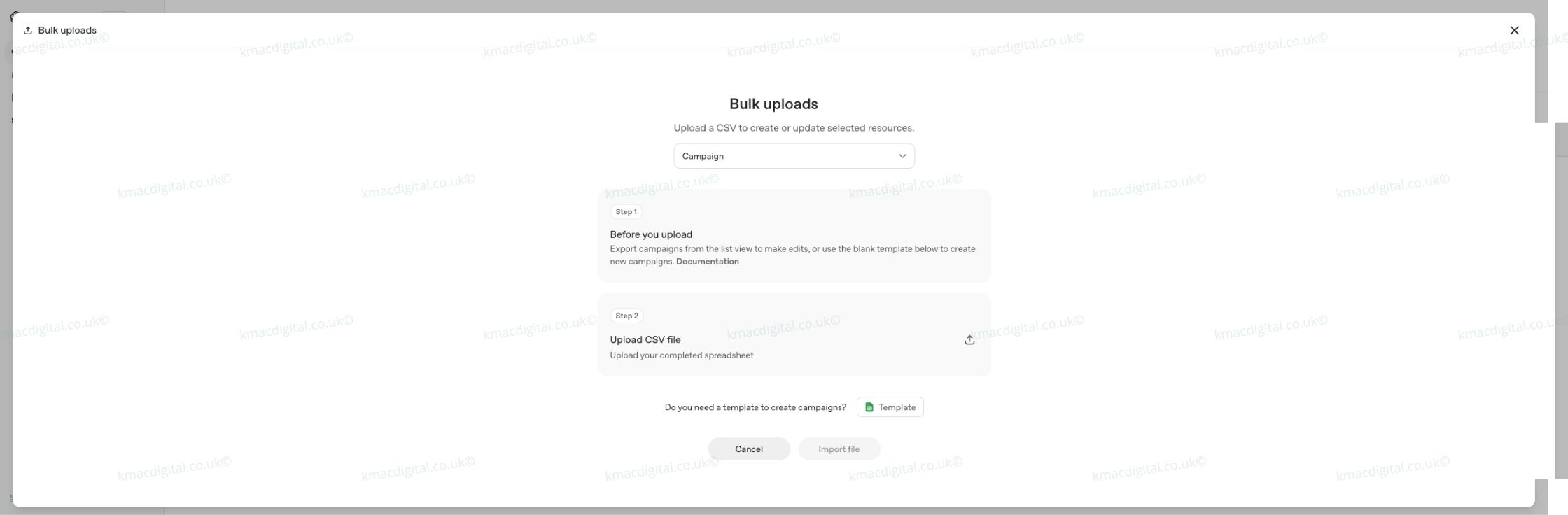
Uploads accept CSV or TXT files up to 500MB, supporting as many as 500 million identifiers, using email addresses, phone numbers, or SHA-256 hashed versions of either. Audiences can’t be edited once created, so a clean, deduplicated list before upload matters.
For a number of mid-size UK charities with active email fundraising programmes, that 25,000 threshold is realistic even where 100,000 isn’t. Worth checking your list size before ruling this feature out.
(Source: openai.com)
How ChatGPT ads work
A quick recap for anyone new to this. OpenAI started showing ads inside ChatGPT in February 2026, on the free and lower-cost “Go” tiers. They show up as clearly labelled, lightly shaded suggestions beneath the assistant’s answer, with links out — and, importantly, they don’t change the answer itself. People on the paid higher tiers don’t see them.
How big is the audience? Globally, ChatGPT is reported to have passed 800–900 million weekly users during 2026. In the UK, various traffic trackers put it at somewhere north of 30 million visits a month, making it one of ChatGPT’s larger European markets. Ads only appear on the free and “Go” tiers, so the addressable pool is a subset of that — but it’s a large and fast-growing one, and unlike search it reaches people mid-conversation rather than mid-query.
Who’s using it in the UK — and how that compares
Surveys put ChatGPT use at roughly one in five UK adults (around 22%), and the profile skews working-age. The majority of users sit in the 18–34 bracket, with 25–34 the single biggest group, and roughly another third aged 35–54. The gender split is fairly even — close to half and half, depending on which study you read. Adoption is heaviest among knowledge workers, with something like four in ten now using AI tools at work, and marketing, legal and media among the highest-using sectors. There’s an important caveat here, though: many of those heavier, professional users will be on paid plans — and paid tiers don’t show ads at all. The ad-reachable audience is only the free and “Go” tier, so in practice you’re reaching the lighter, more casual end of that user base rather than the power users. One thing to keep in mind: the platform doesn’t let you target on any of this yet, so these figures describe the pool you’re reaching, not a setting you can dial in.
For scale, it helps to put those numbers next to the platforms we already buy. ChatGPT’s reported 30 million-plus UK visits a month is meaningful, but it still sits below Meta’s UK reach (Facebook around 38 million users, Instagram around 35 million) and is a small fraction of Google, which handles billions of UK searches a month. The metrics aren’t strictly like-for-like — visits, users and searches are all counted differently — so treat this as orders of magnitude rather than a league table. The takeaway: ChatGPT is already a sizeable audience for a channel this young, but right now it’s a complement to your Meta and search activity, not a replacement for either.
| Platform | Approx. UK audience | What’s counted |
|---|---|---|
| ChatGPT | 30 million+ a month | Visits |
| ~38 million | Users | |
| ~35 million | Users | |
| Billions a month | Searches |
What’s new is the self-serve Ads Manager. It opened to US businesses on 5 May 2026 and has since been widening to more markets, including the UK. That’s the real shift: from ads you could only buy through OpenAI’s team to a dashboard you log into and run yourself.
Targeting is the part that feels different. Rather than demographics or third-party behavioural profiles, ads are matched to the topic and intent of the conversation someone is having right now. Early reporting also points to custom-audience uploads (hashed emails or phone numbers) for including or excluding people — familiar territory if you run Meta. Reported ad formats include sponsored answer cards, product spotlight units and sidebar placements, though what you can actually buy in the self-serve tool today is narrower — more on that below.
Getting set up: verification, currency and billing first
Country, billing currency and time zone are locked in at account creation, so get them right before you submit, they can’t be changed later. Business verification runs through Persona: the form’s default fields (EIN or TIN) are American, but as a UK business you’re not meant to switch to “Individual” to get round that, the actual UK path asks for a registration number (I used “Other National Identification Number”), a VAT number, business website, industry and a physical/legal registered address, then Persona reviews it, with a note that status updates appear in your organisation settings over the next few days. Useful to know: ads can start serving while verification is still pending, the account just nags you to finish it to avoid interruptions later, so there’s no need to sit and wait before testing something small. Billing, for me, only offered a payment card, no invoice option was on the table.
ChatGPT Ads Manager – First impressions
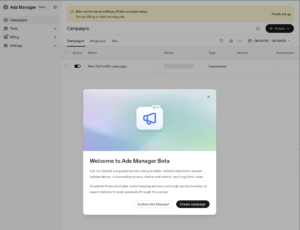
It’s definitely a beta version, and it behaves like one. The mobile interface wasn’t loading correctly for me at all, so had to switch to desktop.
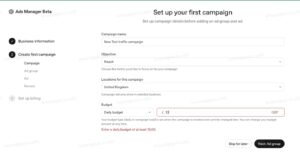
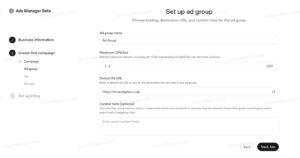
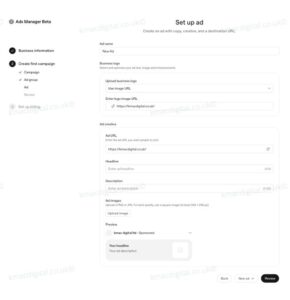
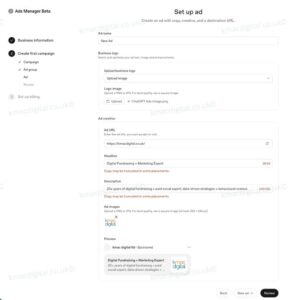
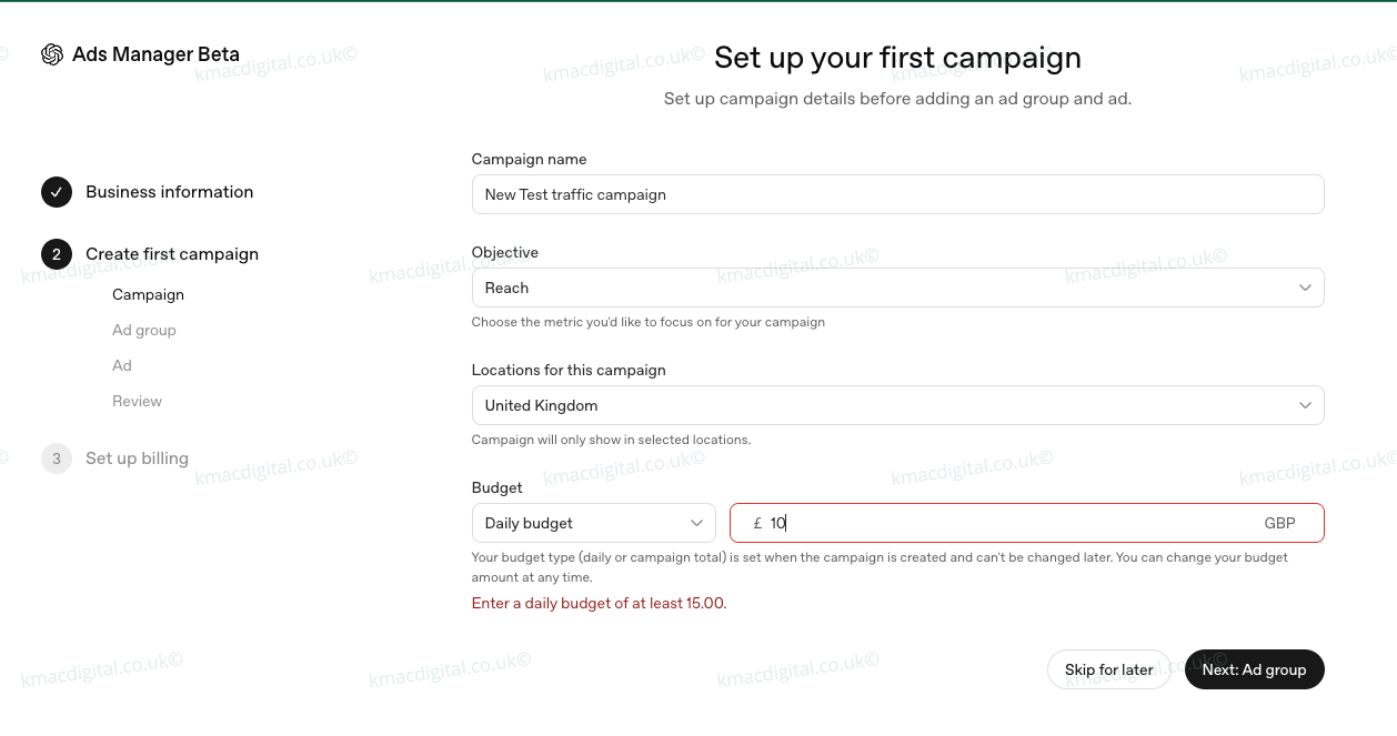
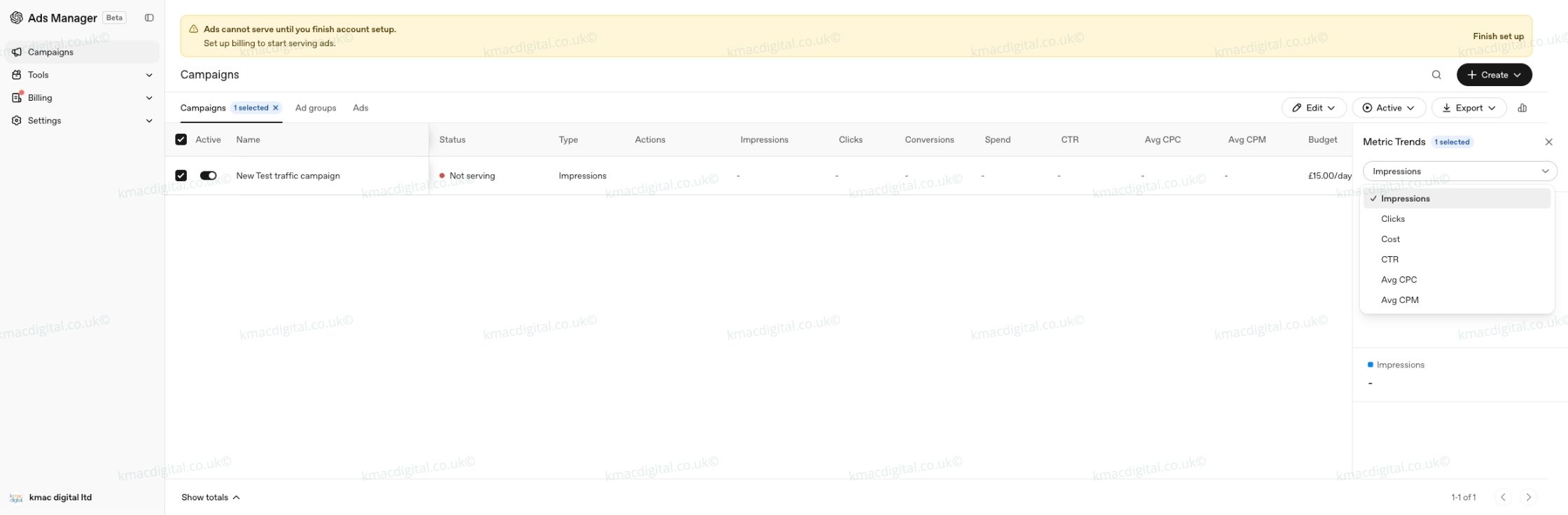
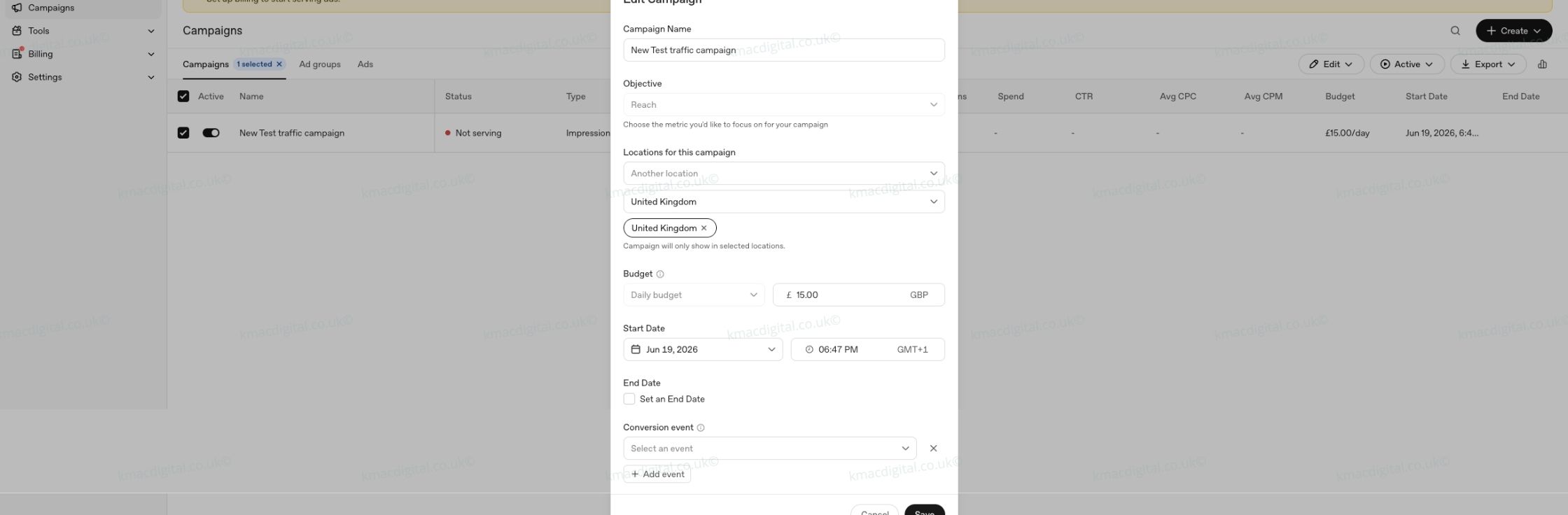
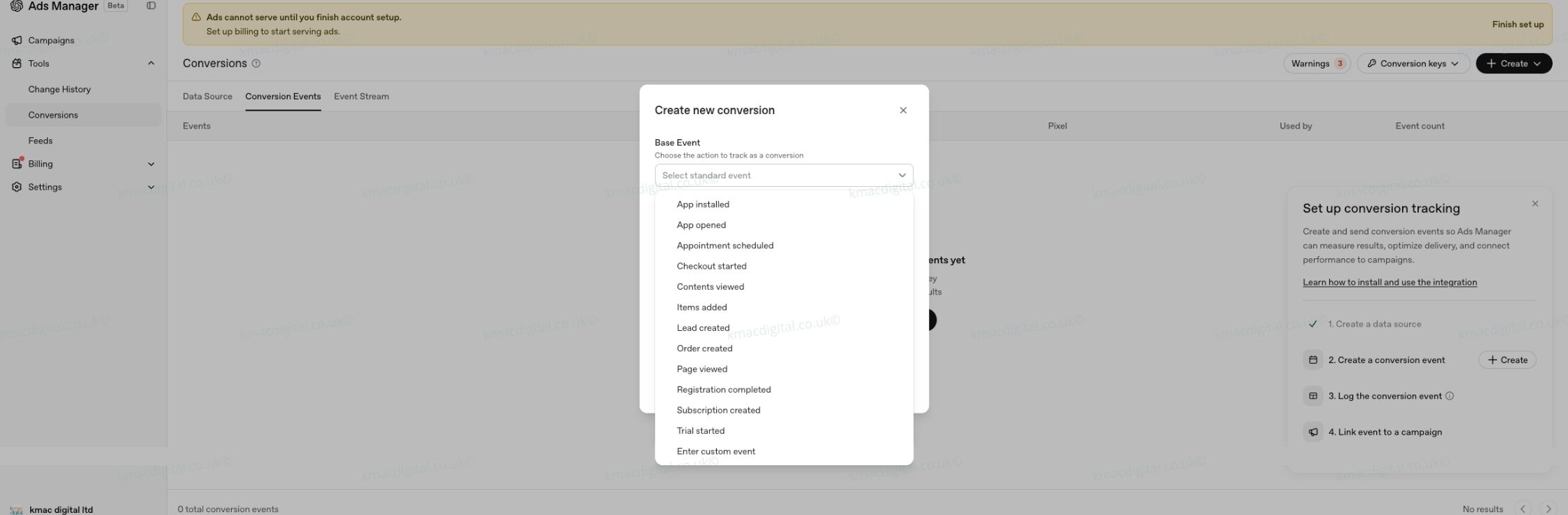
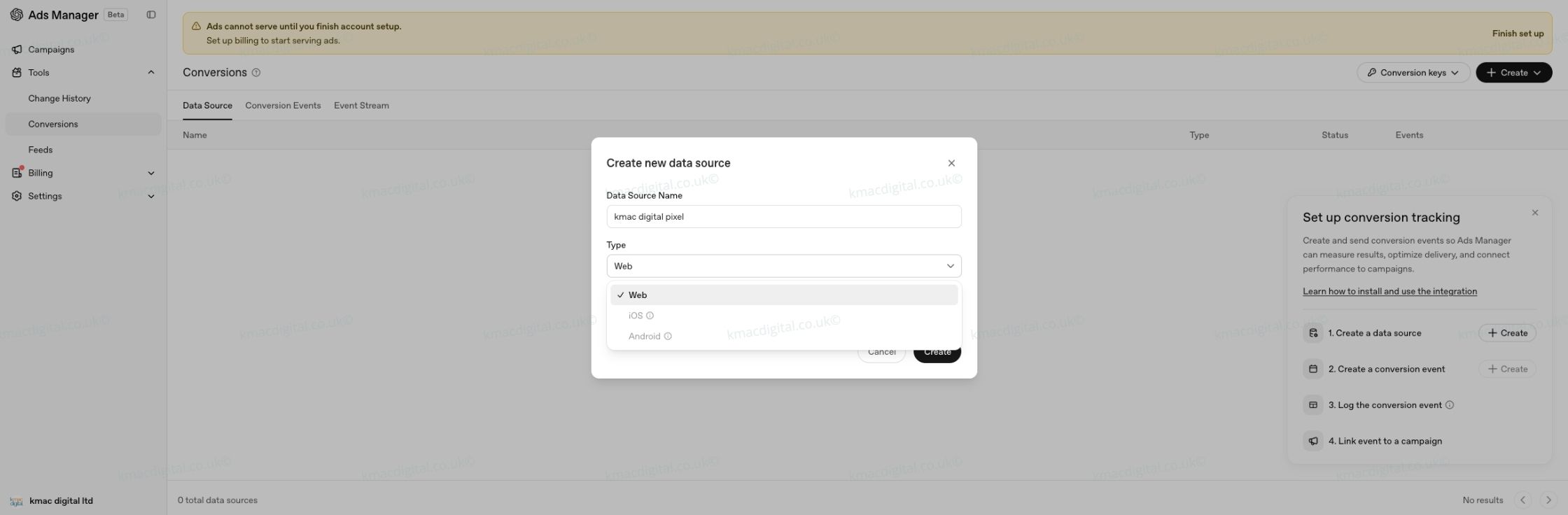
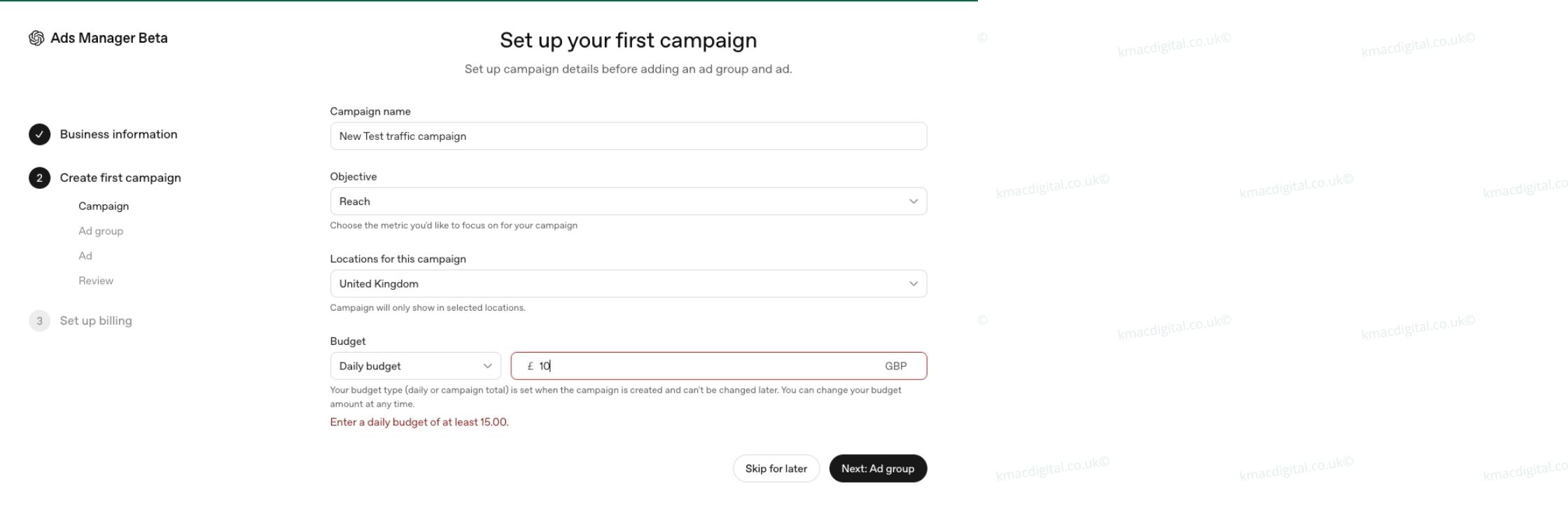
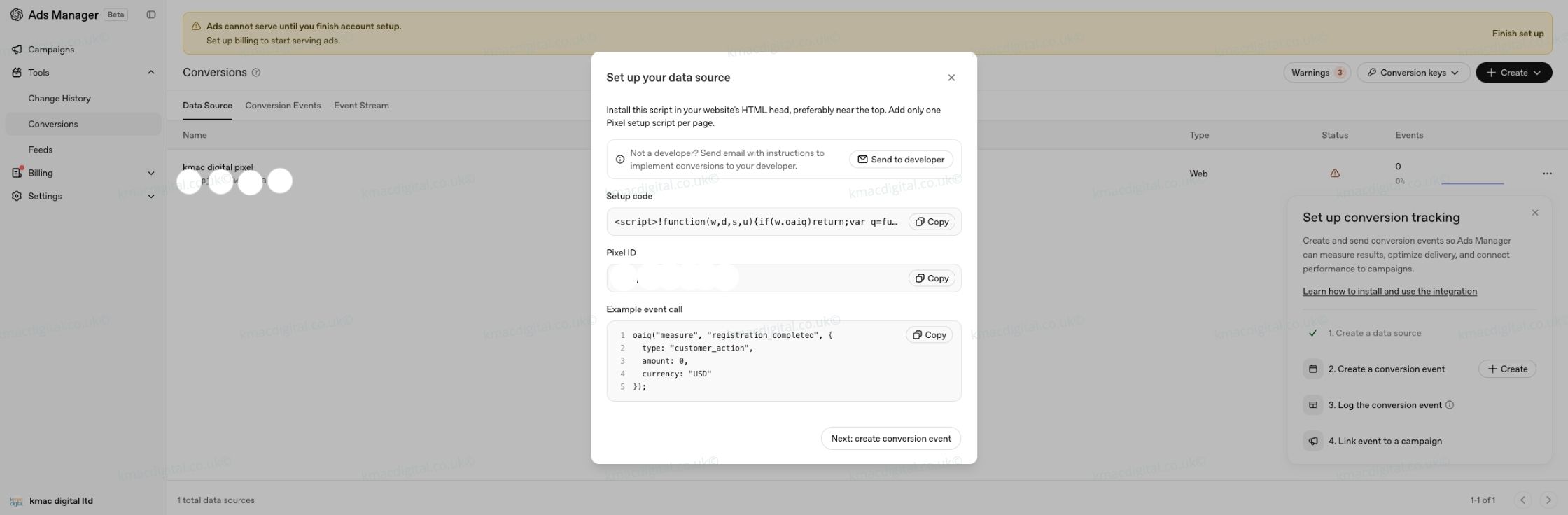
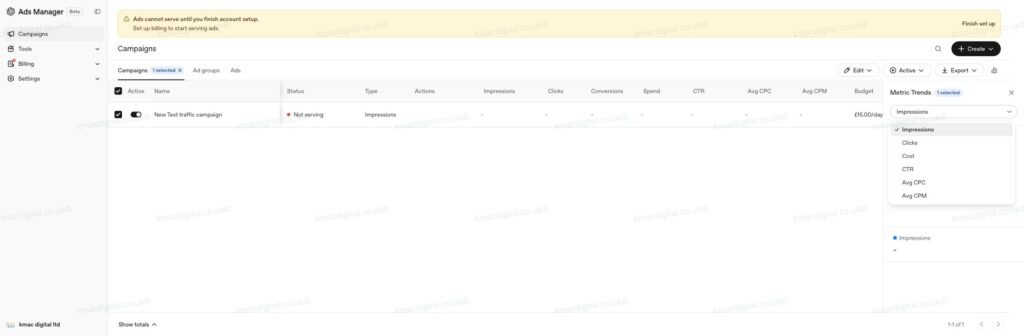
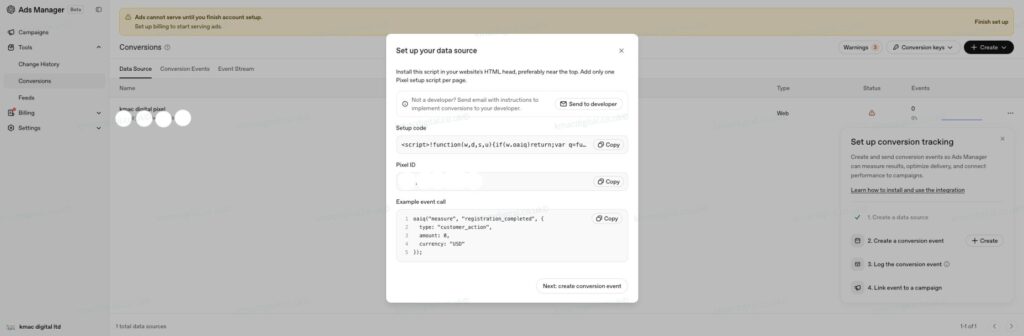
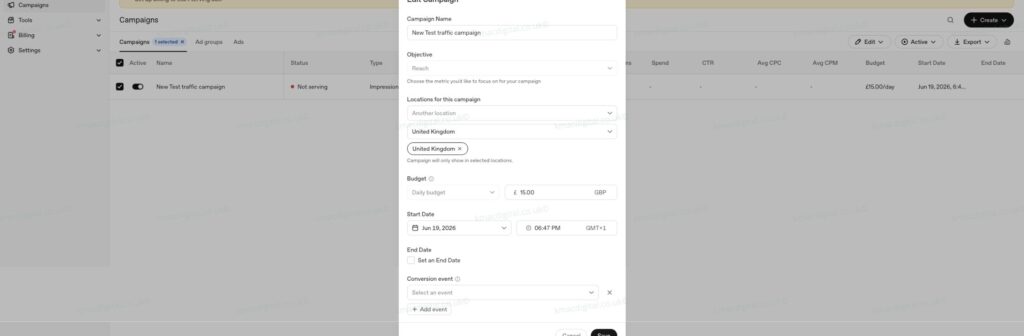
The structure will feel familiar if you’ve run Meta or Google campaigns. There’s a Campaigns view with the columns you’d expect — impressions, clicks, conversions, spend, CTR, CPC, CPM — a campaign builder, and a Conversions section for setting up a data source, a pixel and conversion events. I built a small test campaign with UK targeting and a £15/day budget in a couple of minutes. The plumbing for measurement is clearly being put in place: there’s a pixel to install and a setup flow for logging conversion events, much like the Meta pixel work we already do.

What it costs, and how you bid
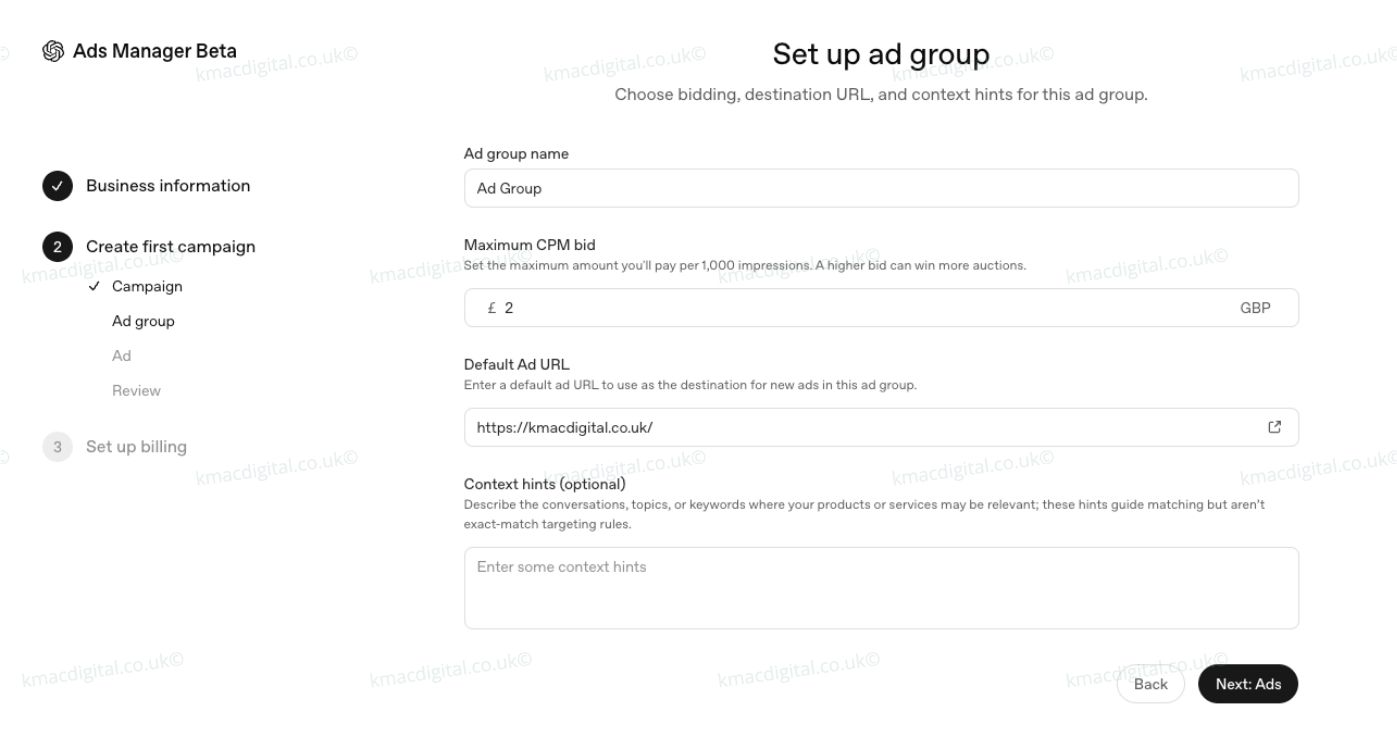
Two buying models sit side by side: CPM (paying per thousand impressions) and CPC (paying per click). OpenAI hasn’t published CPM benchmarks for this beta, but early guidance points to a recommended CPC of roughly $3–5 a click, and what you actually pay will move as more advertisers pile in. The headline change for smaller organisations is that the eye-watering minimum spends from the invite-only pilots (reported anywhere from tens of thousands of dollars upwards) are gone in the self-serve beta. You can start small.
Measurement: the pixel and the Conversions API
If you’ve ever set up a Meta pixel, this will feel familiar. ChatGPT gives you a native pixel to drop on your site (ideally near the top of every page), plus a server-side Conversions/Events API for when client-side tracking isn’t an option. You define conversion events — a donation, a sign-up, a registration — and fire them on your confirmation pages. View-through conversions use a fixed 1-day window and aren’t configurable; they’re reported separately from your main conversions total, which is click-through only. The data-source and pixel setup screens are in the screenshots below.
The one thing that stood out
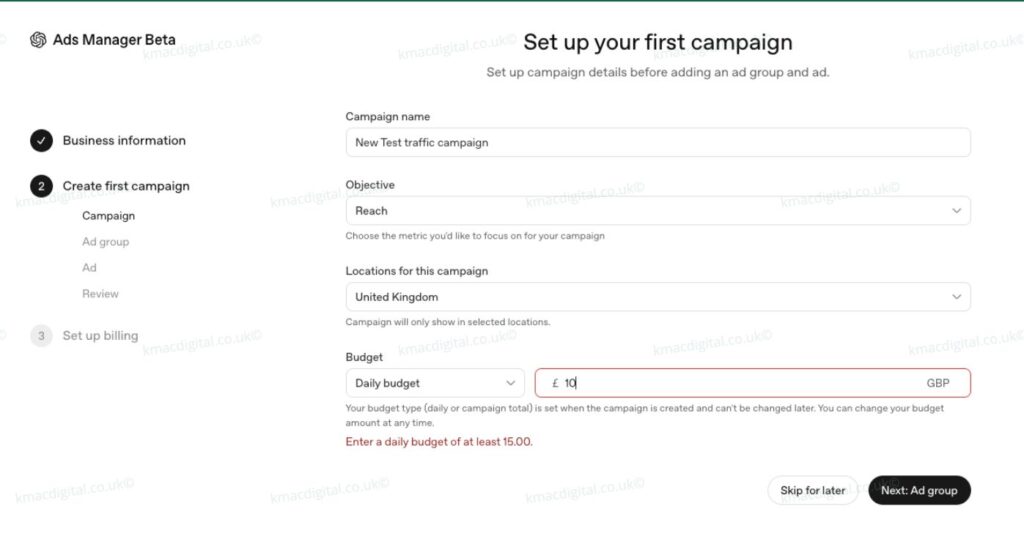
Reach or clicks appear to be the only two campaign objectives available in my interface right now. No awareness, no dedicated conversions objective, no lead forms yet.
In the earlier post I talked about high‐intent donor acquisition, event sign‐ups and legacy giving as the obvious opportunities. The intent is there in how people use ChatGPT — but with clicks or reach as the only two objectives, it’s hard to say if you can optimise for a conversion event or does the campaign objective take precedence.
You can setup a conversion event via the Pixel or an API, so at this stage it’s just testing.
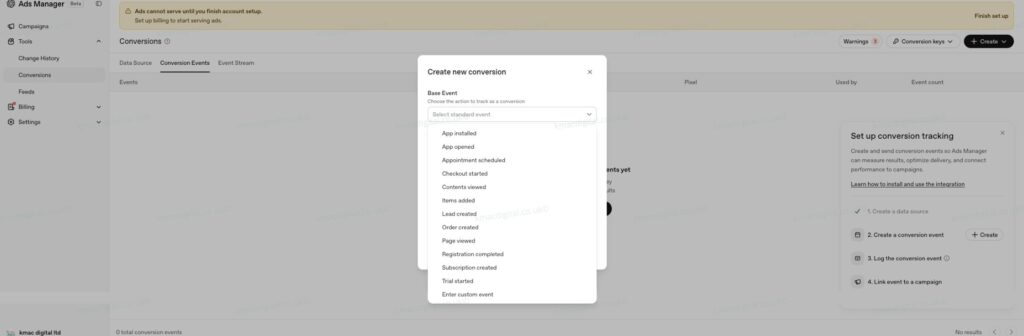
One thing worth flagging straight away: the limited objectives I mention above are already starting to expand. OpenAI has begun rolling out conversion-optimised (CPA) campaigns, with accounts needing live conversion events flowing through the pixel or Conversions API to qualify. So if you do nothing else early, getting that measurement in place is exactly what unlocks the smarter delivery later.
How it compares to Meta and Google
For anyone who lives in Ads Managers, the mental model here is a blend of the two. Like Google, it’s intent-led — you’re reaching people at the moment they’re actively asking about something. Like Meta, the plumbing is pixel, Conversions API, custom audiences, CPC/CPM bidding and attribution windows, so the workflow is recognisable from day one. What’s missing, for now, is the depth: no real demographic or interest targeting, a thin set of objectives, and reporting that in places still arrives as weekly CSV exports rather than a rich dashboard.
The interesting bit is the auction itself. It’s new, and it’s uncrowded. Early on any platform, competition is thin and the cost of learning is low — the same window that rewarded the advertisers who got into Meta and Google early. That’s the real reason to pay attention now, whatever sector you work in.
What I’d do with it (and what I wouldn’t)
The sensible move at this stage probably would be to ring‐fence a small test budget to learn the dynamics of the platform and give you early insights into how ChatGPT users respond to your messaging while the channel is still uncrowded and cheap to learn.
A new ad platform doesn’t change the fundamentals of good fundraising — clear messaging, the right landing pages, careful tone for people who may be asking at a vulnerable moment. It just gives us a new way of reaching donors, supporters and beneficiaries where they are.
I’m planning a small live test next, and I’ll share what I learn.
If you’d like to compare notes — or get your digital framework in shape for this channel — do get in touch and we’ll explore options.
Thinking of testing it? A quick checklist
- Install the ChatGPT pixel and fire at least one real conversion event (a donation or sign-up) — this is what unlocks conversion campaigns later.
- Ring-fence a small test budget; don’t pull spend off proven search or social to fund it.
- Pick one clear landing page and one action you can actually measure.
- Write copy for intent, not interruption — answer the question the person is really asking.
- Mind tone and safeguarding: people may be asking at a vulnerable moment.
- Give it time, and judge it on your own analytics, not just the in-platform numbers.
ChatGPT Ads: quick FAQ
Is ChatGPT Ads available in the UK? Yes — the self-serve Ads Manager has been rolling out beyond the US to more markets including the UK, which is how I have access. Availability is still patchy and very much beta.
Do ads change ChatGPT’s answers? No. They appear as labelled suggestions beneath the response and are kept separate from the answer itself.
What can I optimise for? Today the objectives are limited (reach or clicks). Conversion-optimised (CPA) campaigns are rolling out for accounts that already have conversion events flowing, which is what changes that.
How much does it cost? Both CPM and CPC are supported. OpenAI hasn’t published CPM benchmarks yet, but early guidance puts CPC at roughly $3–5. There’s no large minimum spend in the self-serve beta.
Should charities jump in? Not urgently. Treat it as a small, well-measured experiment — the value right now is learning how the channel behaves, not scale.
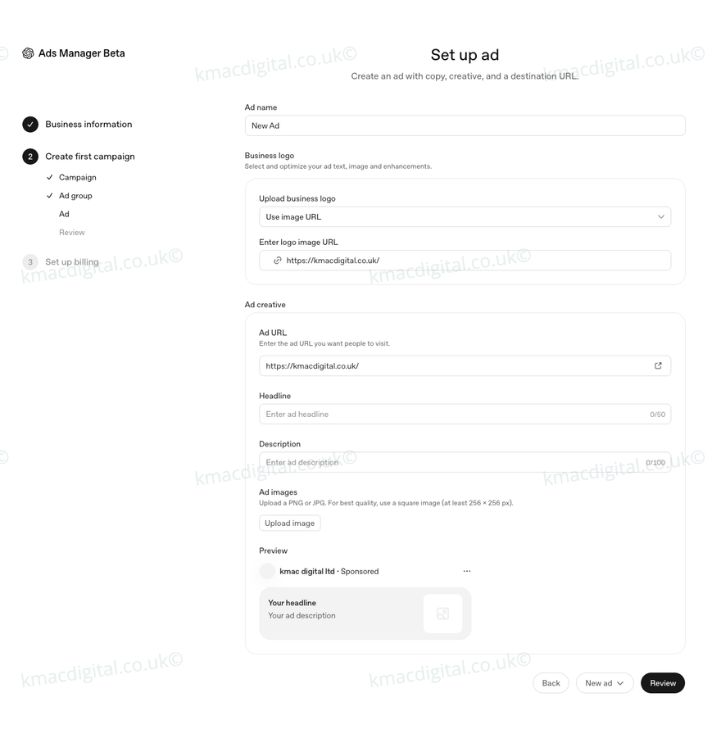
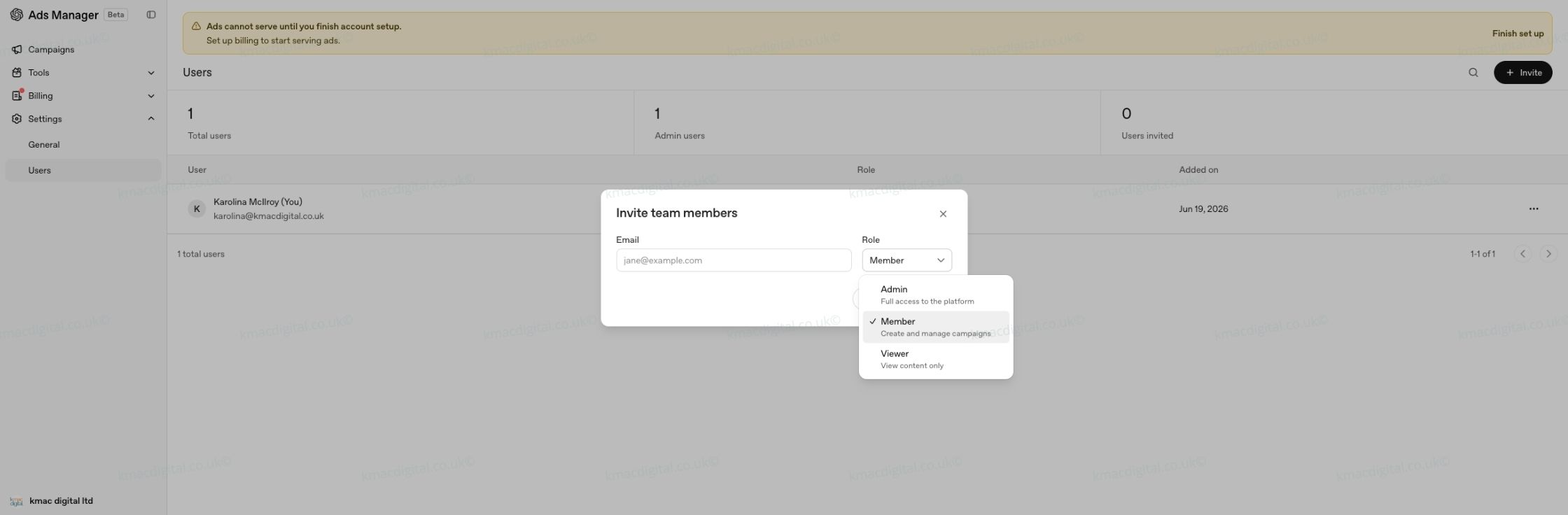
Here are all the first look screenshots from inside the ChatGPT Ads Manager